Buy company24.eu ?
We are moving the project
company24.eu .
Are you interested in purchasing the domain
company24.eu ?
domain@kv-gmbh.de · 0541-91531010
Buy company24.eu ?
How can I clone an NVMe drive to another NVMe drive?
To clone an NVMe drive to another NVMe drive, you can use specialized cloning software such as Acronis True Image, EaseUS Todo Backup, or Macrium Reflect. First, install the cloning software and connect both NVMe drives to your computer. Then, use the software to select the source NVMe drive and the destination NVMe drive, and start the cloning process. Once the cloning is complete, you can swap out the old NVMe drive with the new one, and your system should boot up with all the data and settings transferred over. **
"Does my motherboard support NVMe?"
To determine if your motherboard supports NVMe, you can check the specifications of your motherboard model on the manufacturer's website. Look for information regarding storage interfaces or supported storage devices. If your motherboard supports NVMe, it should be listed as a compatible storage option. Additionally, you can also check the user manual of your motherboard for more detailed information on supported storage technologies. **

Similar search terms for Nvme
Top-Angebote
Products related to Nvme:
-
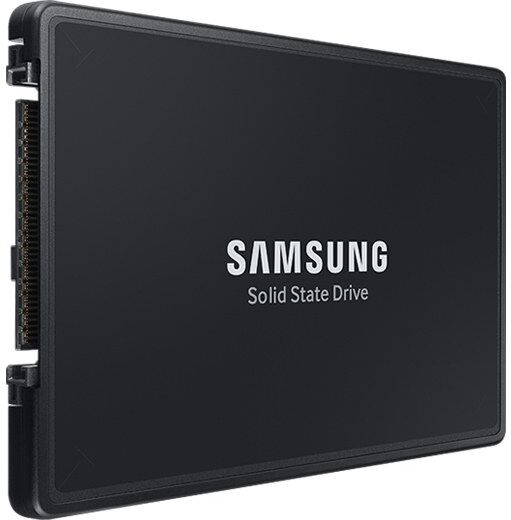
SAMSUNG PM9A3 U.2 PCIe 4.0 NVMe V-NAND TLC Enterprise SSD 1.92TBTop solution for diverse applicationsPM9A3 offers tremendous performance for Read-Intensive data centers by applying PCIe Gen 4, achieving 1000K IOPS in Random Read and 6800 MB/s in sequential read speed. Using impressively low power in small form factors (E1.S, U.2, M.2), PM9A3 delivers an efficient SSD solution for mixed data workloads.Gen4 Speed for Powerful Data CentersThe new generation of performance. Gen4 SSD reaches soaring speeds and handles extreme traffic for smooth data center operations.The New Height of Dynamic SpeedRely on random write speeds of up to 190,000 IOPS and sequential read speeds up to 6,950 MB/s for unparalleled data center performance.Hardware Automation EnabledInstant data processing eliminates overheads for more efficient operationsVarious Form FactorsEngineered to suit a range of data centers. The PM9A3 is available in E1.S, U.2, and M.2 form factors.Choose the high-performance model that fits.Samsung PM9A3 – The Power Behind High Performing Data CentersThe beating heart of any data center are the storage systems that deliver consistent I/O performance. We need them to deliver round the clock great and reliable performance to the tenant virtual machines and containers. Solid-state drives (SSD) are the preferred technology for high performance in cloud applications, of course, but not just any solution will do.Samsung is now unleashing next generation data center performance with its PM9A3 NVMe PCIe SSD. A specialist data center product, this cutting-edge solution offers up to 190,000 IOPS random write time and 6950 MB/S sequential read, as well as up to 50% faster restart times compared to its predecessor. It’s also available in a range of form factors, including M.2, U.2 and E1.S. Providing significant improvements for those needing high end storage, there’s plenty to attract growing data centers that want to create value.Enterprise functionalityData center architects strive to deliver reliable computing and storage resources, but enterprise budgets are not limitless, so they must deliver performance at the lowest total cost. Over-index in either direction and the solution becomes less compelling. Samsung has found the sweet spot. Already a leader in delivering NVMe SSDs, the company is well-versed in providing performance in public cloud applications. Compared to SATA SSDs, top-performing NVMe SSDs can provide more than ten times the read performance and lower latency, while still providing the cost benefits of SATA and low-power consumption per IOP.With the Samsung PM9A3 specifically, users benefit from a combination of high performance and enterprise functionality built especially for data centers. It takes advantage of PCIe Gen 4, which unlocks new levels of speed. Samsung is one of the first movers with Gen 4 technology, launching innovative PCIe Gen4-supporting SSD, the PM1733. With the PM9A3, the company is now taking the lead in the data center space by creating a solution that offers performance where it’s...1531,49 £*Shipping: 0,00 £Secure redirect to the provider
-
Synology Enterprise Series SNV5420 M.2 2280 PCIe 3.0 x4 NVMe Internal SSD 400GBSupercharge your NAS/SANEnterprise Series M.2 NVMe SSDs are designed to intelligently work with Synology DiskStation Manager (DSM) to boost I/O performance. These high-performance NVMe drives accelerate the slower but higher-capacity storage space provided by traditional hard drives, enabling cost-effective, in-place upgrades for existing systems.Consistently fast caching for 24/7 environmentsDesigned specifically for Synology systems, Enterprise Series M.2 NVMe SSDs are built for maximum performance consistency. Each drive is rated for up to 660,000/120,000 4K random read/write IOPS1 across the usable lifespan of the drive. Endurance of up to 2,900 TBW ensures longevityData integrity safeguardsThe SNV3500 and SNV5400 Series offer full end-to-end data protection, including power loss protection to ensure data integrity during unexpected shutdowns. These series have capacitors in their power loss protection circuits to safely write cached data to NAND flash memory during power failures, thus preventing data loss.607,49 £*Shipping: 0,00 £Secure redirect to the provider
-
Micron 7500 MAX U.3 2.5" PCIe 4.0 NVMe 3D TLC NAND Enterprise SSD - 1.6TBThe world’s most advanced mainstream data center SSDThe Micron 7500 SSD is the world’s first mainstream data center SSD with 200+ layer NAND. Micron’s industry-first 232-layer NAND enables class-leading performance and higher power efficiency. It delivers best in class 6x9s QoS, with low and consistent sub-1 millisecond latency to enable rapid, reliable responsiveness for demanding data center workloads. The Micron 7500 SSD accelerates workloads with class-leading PCIe® Gen4 speed in a U.3 form-factor with capacities ranging from 800GB to 15.36TB. It provides superior performance for workloads, such as AI, databases, content delivery, real-time analytics, social media platforms, cloud computing and virtualization.A secure drive for an open compute world, the Micron 7500 SSD includes broad Open Compute Project (OCP) 2.0 support on its standard firmware. OCP provides intelligent management that facilitates rapid and proactive resolution of common data center challenges. The Micron 7500 SSD helps keep your data safe with key security features, like SPDM 1.2 attestation, SHA-512 and RSA standards, and Micron’s Secure Encrypted Environment (SEE) which provides dedicated processing hardware with physical isolation for improved security.The world's most advanced mainstream data center SSDLeading-edge Micron technology and NAND deliver broad OCP standards support, efficiency and security. Micron 232-layer NAND enables increased performance and includes a 6-plane architecture with independent wordline read (iWL), which helps provide best-in-class random read latecy that is up to 83% lower than competition. The Micron 7500 provides broad OCP 2.0 support for management at scale. Micron SEE and advanced security capabilities help keep your data safe.Creating a new class of sub-1ms 6x9s latency drivesLow and consistent latency enables rapid, reliable responsiveness for demanding data center workloads. The Micron 7500 SSD has sub-1 millisecond latency for 6x9s QoS and provides predictable performance for demanding workloads with increasing needs for low latency. The Micron 7500 SSD also has best-in-class 4K, random read latency versus competition, with RocksDB latency showing up to 54% better application response times than competing SSDs.Accelerate your workloads with class-leading Gen4 speedSuperior performance for workloads, such as AI, databases, content delivery, real-time analytics, social media platforms, cloud computing and virtualization. The Micron 7500 drives RocksDB performance up to 2.1x better than other mainstream SSDs and has class-leading performance that beats the competition in random and sequential reads and writes.1908,99 £*Shipping: 0,00 £Secure redirect to the provider


-
How do I remove NVMe?
To remove an NVMe (Non-Volatile Memory Express) drive, you will first need to power off your computer and disconnect it from the power source. Then, open your computer case and locate the NVMe drive. Depending on your computer's configuration, you may need to unscrew a retention screw or release a latch to remove the NVMe drive. Once the drive is released, gently pull it out of the slot. Be sure to handle the NVMe drive carefully and avoid touching the gold connectors. **
-
What is an NVMe SSD?
An NVMe SSD, or Non-Volatile Memory Express Solid State Drive, is a type of storage device that uses flash memory to store data. It is designed to be much faster than traditional hard drives, as it connects directly to the computer's PCIe bus, allowing for much higher data transfer speeds. NVMe SSDs are commonly used in high-performance computing applications, such as gaming, video editing, and data centers, where fast access to large amounts of data is crucial. **
-
Which are good SSDs or NVMe?
Good SSDs or NVMe drives are typically those from reputable brands such as Samsung, Western Digital, Crucial, and Kingston. These brands are known for their reliability, performance, and durability. When choosing an SSD or NVMe drive, it is important to consider factors such as read and write speeds, capacity, and price to find the best option for your specific needs. Additionally, looking for drives with good warranty and customer support can also be beneficial. **
-
What are good SSDs or NVMe?
Good SSDs or NVMe drives are those that offer fast read and write speeds, reliable performance, and a reasonable price. Some popular and highly-rated options include the Samsung 970 EVO Plus, WD Black SN750, and the Crucial MX500. These drives are known for their high performance, durability, and good value for the price. When choosing an SSD or NVMe drive, it's important to consider factors such as capacity, speed, and brand reputation to ensure you get the best option for your needs. **

Is the m2 NVMe too slow?
No, the m2 NVMe is not considered slow. In fact, it is known for its fast read and write speeds compared to traditional hard drives or SATA SSDs. The m2 NVMe utilizes the PCIe interface to deliver high performance, making it a popular choice for those looking for faster storage solutions. Overall, the m2 NVMe is a reliable and efficient option for improving system performance. **
Do two NVMe SSDs work together?
Yes, two NVMe SSDs can work together in a system. They can be configured in a RAID setup to improve performance, redundancy, or a combination of both. By using RAID technology, the two NVMe SSDs can work together to increase storage capacity, speed up data access, and provide data protection in case of drive failure. **
Top-Angebote
Products related to Nvme:
-
Kingston DC2000B PCIe 4.0 NVMe M.2 2280 Enterprise SSD 960GBKingston DC2000B is a high-performance PCIe 4.0 NVMe M.2 SSD that uses the latest Gen 4x4 PCIe interface with 112-layer 3D TLC NAND. Ideally suited for use in high-volume rack-mount servers as an internal boot drive(s) to preserve valuable front-loading drive bays, as well as for use in purpose-built systems where a high-performance M.2 SSD is needed that includes hardware-based on-board power loss protection (PLP). New for DC2000B is an integrated aluminium heatsink that offers broader thermal compatibility for a wide range of systems. DC2000B delivers low latency and excellent IO consistency to handle various workloads from boot drive applications to high-speed application caching. DC2000B is rated at 0.4 DWPD write endurance and carries a five-year warranty.PCIe 4.0 NVMe performanceUtilises PCIe Gen 4x4 lanes for high-performance speeds.On-board power loss protection (PLP)Reduce the possibility of data loss and/or corruption due to unexpected power-off.Low latency and IOPS consistencyFirmware optimised to deliver low latency and IO consistency for high duty cycle workloads.Designed for data center environmentsOptimised to meet the demands of server boot applications with low latency and IO consistency as the key design criteria.742,49 £*Shipping: 0,00 £Secure redirect to the provider
-
SAMSUNG PM9A3 U.2 PCIe 4.0 NVMe V-NAND TLC Enterprise SSD 3.84TBEnterprise SSD for BusinessHigh performance, highly reliable and secure NVMe® U.2 SSD designed for servers that need enhanced data reliability to safeguard critical data.Enhanced for speed and reliabilityThe PM9A3 is the solution to achieving high responsiveness in data centers requiring accelerated performance. Available in capacities of 960GB, 1.92TB, 3.84TB and 7.68TB, the PM9A3 enables your business to excel in handling big data.1Seamless, high-powered performanceGet fast results with the next-gen NVMe® interface. Sequential read/write speeds of up to 6,900/4,100 MB/s, random read/write speeds of up to 1100K/200K IOPS and a suberb level of QoS (quality of service) allow for real-time big data analytics.2Secure critical dataData integrity is critical to data center SSD. The PM9A3 NVMe® U.2 is safeguarded with end-to-end data protection to ensure consistency over the entire data transfer path and prevents data corruption in case of power failure with power loss protection.Enhanced operations efficiencyAccomplish far more with less. Achieve higher efficiency and performance compared to legacy storage systems, with fewer servers, reduced power and cooling, and lower TCO, all with efficient management from the advanced Samsung SSD Toolkit software. 3Samsung reliability and qualityExperience the superior SSD quality and reliability of in-house production using Samsung built components. Empower your 24/7 business to run faster, more efficiently, and at reduced costs with world-class dependability with a limited 5-year warranty or 1.0 DWPD.4,51907,99 £*Shipping: 0,00 £Secure redirect to the provider
-
SAMSUNG PM9A3 U.2 PCIe 4.0 NVMe V-NAND TLC Enterprise SSD 1.92TBTop solution for diverse applicationsPM9A3 offers tremendous performance for Read-Intensive data centers by applying PCIe Gen 4, achieving 1000K IOPS in Random Read and 6800 MB/s in sequential read speed. Using impressively low power in small form factors (E1.S, U.2, M.2), PM9A3 delivers an efficient SSD solution for mixed data workloads.Gen4 Speed for Powerful Data CentersThe new generation of performance. Gen4 SSD reaches soaring speeds and handles extreme traffic for smooth data center operations.The New Height of Dynamic SpeedRely on random write speeds of up to 190,000 IOPS and sequential read speeds up to 6,950 MB/s for unparalleled data center performance.Hardware Automation EnabledInstant data processing eliminates overheads for more efficient operationsVarious Form FactorsEngineered to suit a range of data centers. The PM9A3 is available in E1.S, U.2, and M.2 form factors.Choose the high-performance model that fits.Samsung PM9A3 – The Power Behind High Performing Data CentersThe beating heart of any data center are the storage systems that deliver consistent I/O performance. We need them to deliver round the clock great and reliable performance to the tenant virtual machines and containers. Solid-state drives (SSD) are the preferred technology for high performance in cloud applications, of course, but not just any solution will do.Samsung is now unleashing next generation data center performance with its PM9A3 NVMe PCIe SSD. A specialist data center product, this cutting-edge solution offers up to 190,000 IOPS random write time and 6950 MB/S sequential read, as well as up to 50% faster restart times compared to its predecessor. It’s also available in a range of form factors, including M.2, U.2 and E1.S. Providing significant improvements for those needing high end storage, there’s plenty to attract growing data centers that want to create value.Enterprise functionalityData center architects strive to deliver reliable computing and storage resources, but enterprise budgets are not limitless, so they must deliver performance at the lowest total cost. Over-index in either direction and the solution becomes less compelling. Samsung has found the sweet spot. Already a leader in delivering NVMe SSDs, the company is well-versed in providing performance in public cloud applications. Compared to SATA SSDs, top-performing NVMe SSDs can provide more than ten times the read performance and lower latency, while still providing the cost benefits of SATA and low-power consumption per IOP.With the Samsung PM9A3 specifically, users benefit from a combination of high performance and enterprise functionality built especially for data centers. It takes advantage of PCIe Gen 4, which unlocks new levels of speed. Samsung is one of the first movers with Gen 4 technology, launching innovative PCIe Gen4-supporting SSD, the PM1733. With the PM9A3, the company is now taking the lead in the data center space by creating a solution that offers performance where it’s...1531,49 £*Shipping: 0,00 £Secure redirect to the provider
-
Synology Enterprise Series SNV5420 M.2 2280 PCIe 3.0 x4 NVMe Internal SSD 400GBSupercharge your NAS/SANEnterprise Series M.2 NVMe SSDs are designed to intelligently work with Synology DiskStation Manager (DSM) to boost I/O performance. These high-performance NVMe drives accelerate the slower but higher-capacity storage space provided by traditional hard drives, enabling cost-effective, in-place upgrades for existing systems.Consistently fast caching for 24/7 environmentsDesigned specifically for Synology systems, Enterprise Series M.2 NVMe SSDs are built for maximum performance consistency. Each drive is rated for up to 660,000/120,000 4K random read/write IOPS1 across the usable lifespan of the drive. Endurance of up to 2,900 TBW ensures longevityData integrity safeguardsThe SNV3500 and SNV5400 Series offer full end-to-end data protection, including power loss protection to ensure data integrity during unexpected shutdowns. These series have capacitors in their power loss protection circuits to safely write cached data to NAND flash memory during power failures, thus preventing data loss.607,49 £*Shipping: 0,00 £Secure redirect to the provider
-
How can I clone an NVMe drive to another NVMe drive?
To clone an NVMe drive to another NVMe drive, you can use specialized cloning software such as Acronis True Image, EaseUS Todo Backup, or Macrium Reflect. First, install the cloning software and connect both NVMe drives to your computer. Then, use the software to select the source NVMe drive and the destination NVMe drive, and start the cloning process. Once the cloning is complete, you can swap out the old NVMe drive with the new one, and your system should boot up with all the data and settings transferred over. **
-
"Does my motherboard support NVMe?"
To determine if your motherboard supports NVMe, you can check the specifications of your motherboard model on the manufacturer's website. Look for information regarding storage interfaces or supported storage devices. If your motherboard supports NVMe, it should be listed as a compatible storage option. Additionally, you can also check the user manual of your motherboard for more detailed information on supported storage technologies. **
-
How do I remove NVMe?
To remove an NVMe (Non-Volatile Memory Express) drive, you will first need to power off your computer and disconnect it from the power source. Then, open your computer case and locate the NVMe drive. Depending on your computer's configuration, you may need to unscrew a retention screw or release a latch to remove the NVMe drive. Once the drive is released, gently pull it out of the slot. Be sure to handle the NVMe drive carefully and avoid touching the gold connectors. **
-
What is an NVMe SSD?
An NVMe SSD, or Non-Volatile Memory Express Solid State Drive, is a type of storage device that uses flash memory to store data. It is designed to be much faster than traditional hard drives, as it connects directly to the computer's PCIe bus, allowing for much higher data transfer speeds. NVMe SSDs are commonly used in high-performance computing applications, such as gaming, video editing, and data centers, where fast access to large amounts of data is crucial. **
Similar search terms for Nvme
-
Micron 7500 MAX U.3 2.5" PCIe 4.0 NVMe 3D TLC NAND Enterprise SSD - 1.6TBThe world’s most advanced mainstream data center SSDThe Micron 7500 SSD is the world’s first mainstream data center SSD with 200+ layer NAND. Micron’s industry-first 232-layer NAND enables class-leading performance and higher power efficiency. It delivers best in class 6x9s QoS, with low and consistent sub-1 millisecond latency to enable rapid, reliable responsiveness for demanding data center workloads. The Micron 7500 SSD accelerates workloads with class-leading PCIe® Gen4 speed in a U.3 form-factor with capacities ranging from 800GB to 15.36TB. It provides superior performance for workloads, such as AI, databases, content delivery, real-time analytics, social media platforms, cloud computing and virtualization.A secure drive for an open compute world, the Micron 7500 SSD includes broad Open Compute Project (OCP) 2.0 support on its standard firmware. OCP provides intelligent management that facilitates rapid and proactive resolution of common data center challenges. The Micron 7500 SSD helps keep your data safe with key security features, like SPDM 1.2 attestation, SHA-512 and RSA standards, and Micron’s Secure Encrypted Environment (SEE) which provides dedicated processing hardware with physical isolation for improved security.The world's most advanced mainstream data center SSDLeading-edge Micron technology and NAND deliver broad OCP standards support, efficiency and security. Micron 232-layer NAND enables increased performance and includes a 6-plane architecture with independent wordline read (iWL), which helps provide best-in-class random read latecy that is up to 83% lower than competition. The Micron 7500 provides broad OCP 2.0 support for management at scale. Micron SEE and advanced security capabilities help keep your data safe.Creating a new class of sub-1ms 6x9s latency drivesLow and consistent latency enables rapid, reliable responsiveness for demanding data center workloads. The Micron 7500 SSD has sub-1 millisecond latency for 6x9s QoS and provides predictable performance for demanding workloads with increasing needs for low latency. The Micron 7500 SSD also has best-in-class 4K, random read latency versus competition, with RocksDB latency showing up to 54% better application response times than competing SSDs.Accelerate your workloads with class-leading Gen4 speedSuperior performance for workloads, such as AI, databases, content delivery, real-time analytics, social media platforms, cloud computing and virtualization. The Micron 7500 drives RocksDB performance up to 2.1x better than other mainstream SSDs and has class-leading performance that beats the competition in random and sequential reads and writes.1908,99 £*Shipping: 0,00 £Secure redirect to the provider
-
Sandisk WD_BLACK SN7100X NVMe SSD 2TB - BlackDescription With read speeds of up to 7,250 MB/s, the SanDisk WD_BLACK SN7100X NVMe SSD is designed for gamers seeking high performance. This SSD is officially licensed for Xbox gaming, making it an ideal choice for users looking to upgrade their ROG Xbox Ally or PC storage. The drive features a PCIe Gen 4.0 interface and is built with Sandisk’s next generation TLC 3D CBA NAND technology, ensuring fast and efficient operation. Additionally, it offers up to 90% more power efficiency compared to previous generations, making it suitable for on-the-go gaming. An essential addition for enhancing your gaming experience.244,49 £*Shipping: 0,00 £Secure redirect to the provider
-
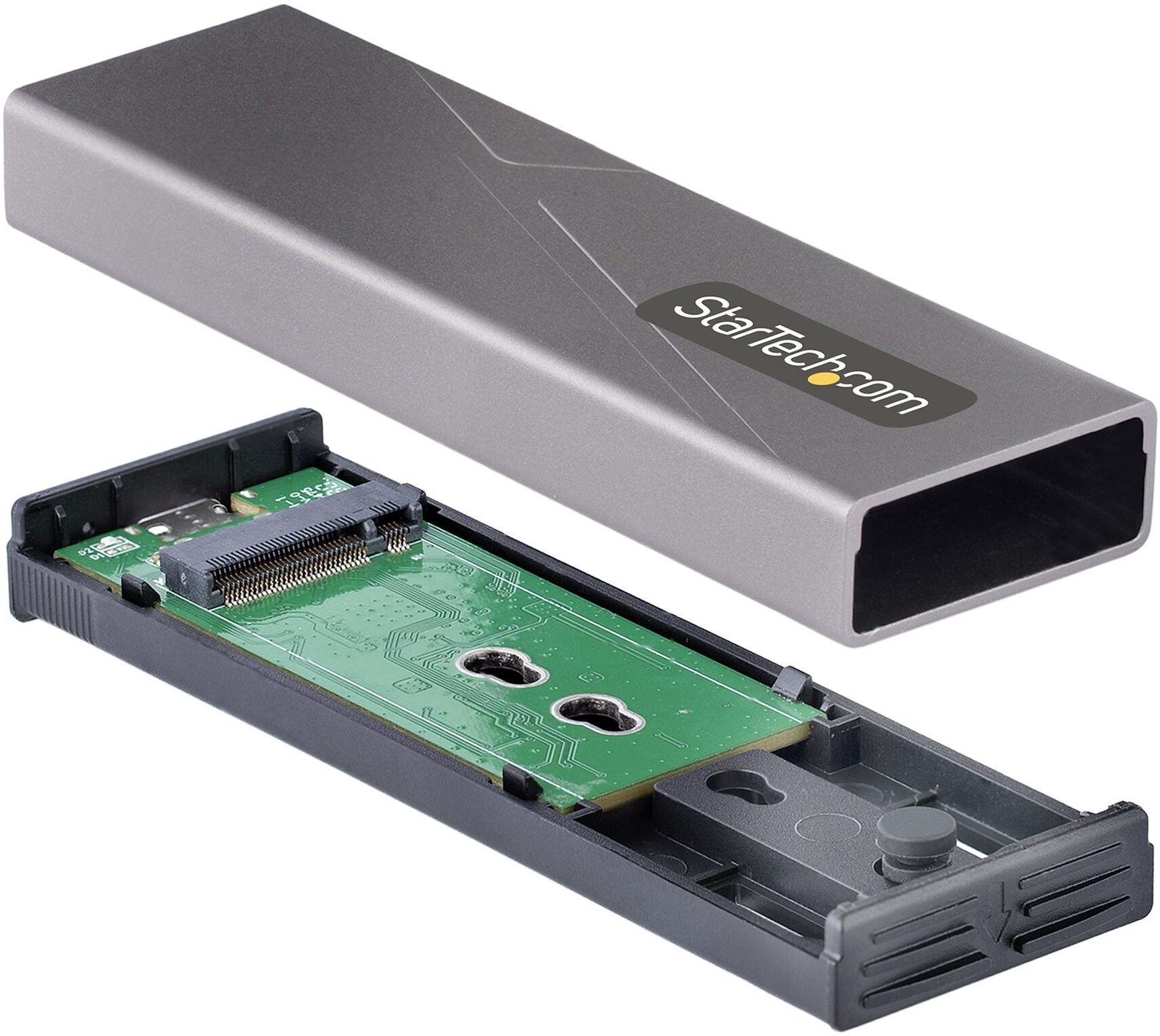
STARTECH M2-USB-C-NVME-SATA M.2 NVMe/SATA SSD Enclosure USB-C 10Gbps 2230/2242/2260/2280 Aluminium Space GreyPortable external storage enclosure supporting M.2 NVMe and SATA SSDs (2230/2242/2260/2280 sizes) with USB-C 3.2 Gen 2 connectivity delivering 10 Gbit/s data transfer. Aluminum construction weighing 52 g with tool-free drive installation.63,99 £*Shipping: 0,00 £Secure redirect to the provider
-
Which are good SSDs or NVMe?
Good SSDs or NVMe drives are typically those from reputable brands such as Samsung, Western Digital, Crucial, and Kingston. These brands are known for their reliability, performance, and durability. When choosing an SSD or NVMe drive, it is important to consider factors such as read and write speeds, capacity, and price to find the best option for your specific needs. Additionally, looking for drives with good warranty and customer support can also be beneficial. **
-
What are good SSDs or NVMe?
Good SSDs or NVMe drives are those that offer fast read and write speeds, reliable performance, and a reasonable price. Some popular and highly-rated options include the Samsung 970 EVO Plus, WD Black SN750, and the Crucial MX500. These drives are known for their high performance, durability, and good value for the price. When choosing an SSD or NVMe drive, it's important to consider factors such as capacity, speed, and brand reputation to ensure you get the best option for your needs. **
-
Is the m2 NVMe too slow?
No, the m2 NVMe is not considered slow. In fact, it is known for its fast read and write speeds compared to traditional hard drives or SATA SSDs. The m2 NVMe utilizes the PCIe interface to deliver high performance, making it a popular choice for those looking for faster storage solutions. Overall, the m2 NVMe is a reliable and efficient option for improving system performance. **
-
Do two NVMe SSDs work together?
Yes, two NVMe SSDs can work together in a system. They can be configured in a RAID setup to improve performance, redundancy, or a combination of both. By using RAID technology, the two NVMe SSDs can work together to increase storage capacity, speed up data access, and provide data protection in case of drive failure. **
* All prices are inclusive of VAT and, if applicable, plus shipping costs. The offer information is based on the details provided by the respective shop and is updated through automated processes. Real-time updates do not occur, so deviations can occur in individual cases. ** Note: Parts of this content were created by AI.